
VET Energy’s Carbon Fiber Division specializes in the custom manufacture and supply of carbon-fiber and carbon-carbon insulation materials for crystal growth furnaces used in the photovoltaic, semiconductor, and wide-bandgap semiconductor industries.
The Carbon Fiber Division is built around the practical requirements of crystal growers for high-temperature hot-zone insulation. Furnace designs differ significantly in dimensions, structure, material density, and purity requirements, making standard products difficult to apply directly. VET Energy therefore focuses on build-to-print OEM manufacturing, supplying soft carbon felt, rigid carbon felt, C/C insulation cylinders, and various custom-shaped C/C insulation components for sample qualification, small-batch prototyping, and volume production.
1. The Critical Role of Carbon Fiber Insulation in Crystal Growth Hot Zones
Crystal growth furnaces typically operate for extended periods at high temperatures under vacuum or an inert atmosphere. The primary function of the insulation system is to reduce heat transfer to the furnace body while working together with the heater, crucible, and other graphite hot-zone components to help maintain the required thermal field and temperature gradient. In long-cycle equipment, the insulation material must also retain structural stability and dimensional consistency through repeated heating and cooling cycles.
Photovoltaic monocrystalline silicon, semiconductor-grade monocrystalline silicon, and silicon carbide crystal growth involve different temperature ranges, cleanliness requirements, and hot-zone structures. No single insulation material is suitable for every furnace type. Key parameters to confirm during procurement include material type, density, thickness, purity, finished dimensions, installation position, and acceptance criteria.
2. Three Core Product Categories
VET Energy’s insulation products for crystal growth furnaces are divided into three main categories. Each category has distinct characteristics in flexibility, structural strength, processing method, and installation position, allowing it to be adapted to different furnace designs.
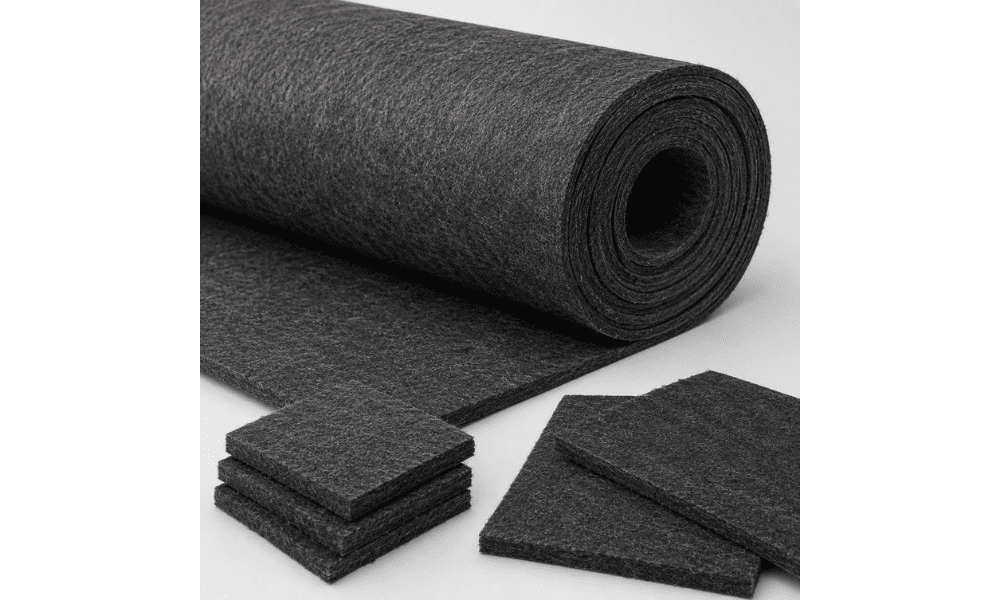
1. Soft Carbon Felt
Soft carbon felt offers good flexibility and can be cut easily. It is suitable for insulation areas inside the furnace that require wrapping, filling, or multilayer installation.
Processing Options: It can be supplied as rolls, sheets, or customer-specified profiles. Thickness, dimensions, and layer configuration are confirmed according to the drawing;
Key Advantages: It adapts well to spaces of different shapes and offers flexible installation;
Points to Confirm: Installation compression ratio, fixing method, and actual installed thickness should be defined before the project begins.
2. Rigid Carbon Felt
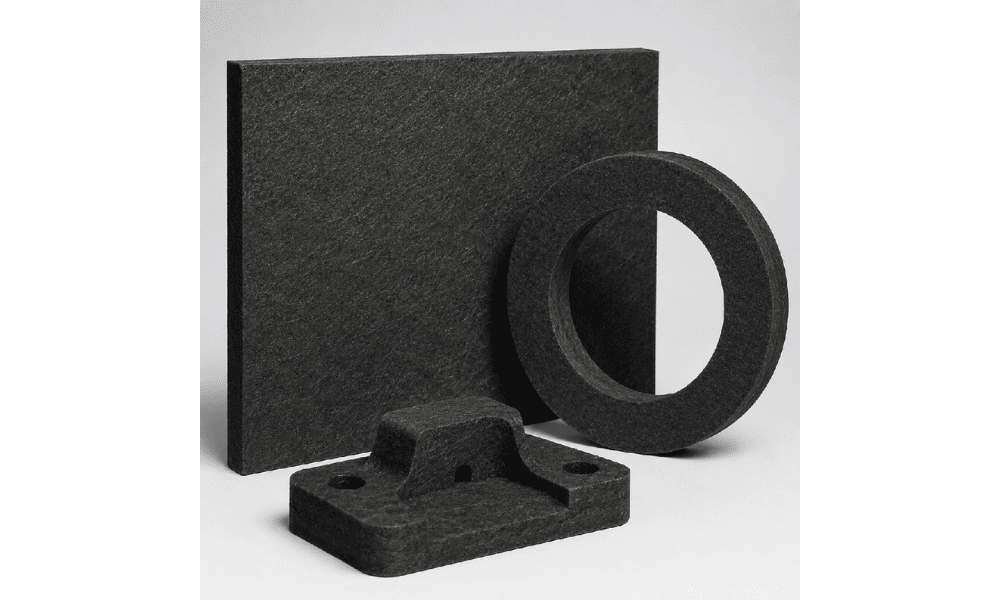
Rigid carbon felt maintains a stable geometric form and is suitable for insulation locations that require a fixed profile and a degree of structural support.
Processing Options: It can be machined according to drawings into plates, rings, cylinders, and other custom shapes, including holes, slots, and localized precision machining;
Key Advantages: Stable shape and good structural support;
Points to Confirm: For large or thin-walled products, drawings should clearly identify critical dimensions, tolerances, and vulnerable areas so that suitable machining and packaging plans can be developed.
3. C/C Insulation Cylinders and Custom-Shaped C/C Insulation Components
C/C insulation cylinders are mainly used in hot-zone locations that require a fixed shape and high structural stability.
Product Range: In addition to cylindrical products, furnace-top and furnace-bottom components, support rings, insulation rings, and other custom-shaped C/C insulation components can be manufactured to customer drawings;
Process Characteristics: Production involves multiple stages, including forming, heat treatment, and machining;
Lead-Time Factors: Delivery time depends on product dimensions, structural complexity, and process requirements.
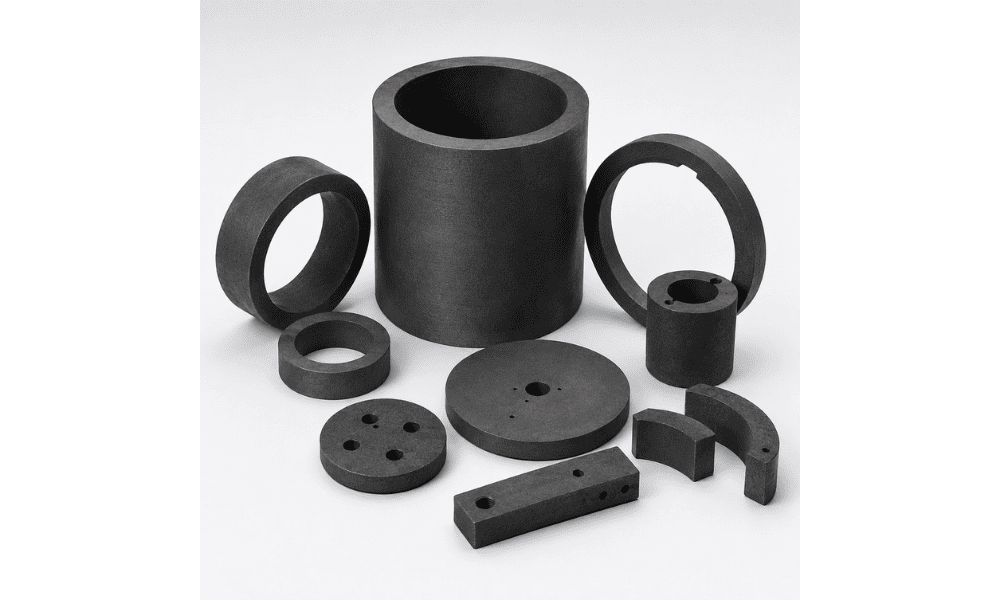
Illustration of C/C Insulation Cylinders and Custom-Shaped Components
3. Applications in Three Major Types of Crystal Growth Furnaces
VET Energy’s carbon-fiber and carbon-carbon insulation materials are mainly used in three types of crystal growth furnaces, each with its own key priorities.
1. Photovoltaic Monocrystalline Silicon Growth Furnaces
In photovoltaic monocrystalline silicon growth furnaces, insulation materials are mainly installed along the furnace sides, top, bottom, and around the heater.
Key Priorities: Thermal insulation efficiency, service life, batch-to-batch consistency, and total cost of ownership;
Performance Requirements: For large hot zones or continuous crystal-pulling operations, dimensional consistency and replacement intervals directly affect equipment maintenance efficiency.
2. Semiconductor-Grade Monocrystalline Silicon Growth Furnaces
Semiconductor-grade monocrystalline silicon growth places more stringent requirements on process stability and cleanliness.
Key Priorities: Ash content, impurities, volatile content, dimensional tolerances, and batch traceability;
Special Requirements: Inspection items should be clearly agreed by both parties in the drawings and quality specifications to verify that the product meets the cleanliness requirements defined for the project.
3. Silicon Carbide Crystal Growth Furnaces
Silicon carbide crystal growth furnaces typically operate at higher temperatures, placing greater demands on the high-temperature stability, purity, and shape-retention capability of insulation materials.
Key Priorities: High-temperature stability, purity, structural retention, and long-term service performance;
Selection Principles: Material grade, thickness, and structure should be selected according to the furnace design, crucible position, operating atmosphere, and intended growth cycle.
4. Build-to-Print OEM Manufacturing Based on Customer Drawings
VET Energy currently provides build-to-print OEM manufacturing services and does not provide ODM services. Product structural design, functional definition, and final technical specifications remain customer-led. Based on customer drawings, samples, and acceptance requirements, VET Energy performs manufacturability review, process planning, production, and inspection.
1. Information Required for Quotation
To improve quotation and technical-review efficiency, customers are advised to provide the following information:
• Drawing Files: 2D drawings or 3D models with critical dimensions and tolerances clearly marked;
• Material Requirements: Product name, material type, density, and any other material-grade requirements;
• Operating Conditions: Equipment type, installation position, maximum operating temperature, and process atmosphere;
• Quality Requirements: Purity, ash content, surface condition, and clean-packaging requirements;
• Quantity and Delivery: Sample quantity, anticipated volume demand, and target delivery date;
• Acceptance Criteria: Dimensional inspection, material testing, and any other acceptance standards.
When only an existing sample is available, VET Energy can assess its dimensions and manufacturing feasibility; however, the final drawing must still be confirmed by the customer before formal production. If machining risks are identified in the drawing during production preparation, VET Energy will provide design-for-manufacturability recommendations. Any change to structure or dimensions may be implemented only after written customer approval.
5. MOQ Policy, Small-Batch Qualification, and Lead Times
1. Minimum Order Quantity (MOQ)
Because all products are custom OEM parts, there is no single fixed MOQ. It is determined based on material type, product dimensions, machining complexity, tooling requirements, and raw-material preparation.
• New Project Qualification: Single-piece samples or small-batch deliveries can be evaluated;
• MOQ Confirmation: Final requirements are subject to technical review and formal quotation.
2. Standard Lead Times
Standard lead times are typically 30-90 business days, calculated from confirmation of the final drawings, technical specifications, order, and required commercial terms:
• Soft Carbon Felt (Simple Processing): Generally requires a shorter lead time;
• Large Rigid Carbon Felt, C/C Insulation Cylinders, and Complex Custom-Shaped C/C Parts: Require longer forming, heat-treatment, and machining cycles.
3. Factors That May Affect Lead Time
The following conditions may extend the lead time:
• Customer drawing changes during production;
• Separate raw-material preparation or development of new tooling;
• Additional machining time for large or complex structures;
• Special purification, third-party testing, or clean-packaging requirements added to the project;
• Uncontrollable changes in international transportation or customs clearance.
If any issue may affect delivery, VET Energy will promptly communicate the revised production milestones and estimated shipment date.
6. End-to-End Quality Control Under ISO 9001
VET Energy organizes its production and quality activities under an ISO 9001 quality management system. For OEM products, quality control is based on the customer-approved drawings, technical specifications, and inspection standards.
1. Key Quality Control Stages
• Raw Material and Batch Verification: Confirm the material type, specification, and batch information;
• Process Control: Record key parameters during forming, heat treatment, and machining;
• Dimensional Inspection: Inspect outer diameter, inner diameter, height, thickness, hole position, and other critical dimensions against the drawing;
• Appearance and Packaging Inspection: Confirm surface condition, edge integrity, quantity, and packaging method;
• Batch Traceability: Establish complete traceability through order records, drawing revisions, raw-material batches, and production records.
2. Testing and Inspection Notes
Whether bulk density, ash content, purity, or other material-performance items are tested, and whether testing is performed internally or by a third party, should be clearly agreed during the quotation and order stages. Final inspection content is governed by the quality documents approved by both parties. Tests not specified in the order are not included as standard deliverables.
7. Certifications, Inspection Reports, and Compliance Documentation
VET Energy can provide ISO 9001 quality management system certification documentation. Depending on the product and order agreement, the following documents may also be provided:
• Product Specification Sheet
• Final Inspection Records
• Dimensional Inspection Report
• Material and Batch Information
• Relevant Traceability Documents
If ash content, purity, or other specialized third-party testing is required, the test items, methods, acceptance criteria, sample quantity, and cost responsibility should be defined before production.
8. Packaging, Global Shipping, and Handling of Delivery Issues
1. Product-Specific Packaging Solutions
Different products require targeted packaging strategies:
• Soft Carbon Felt: Protection against moisture, contamination, and uncontrolled compression;
• Rigid Carbon Felt, C/C Insulation Cylinders, and Custom-Shaped Parts: Protection against impact, edge damage, and deformation in transit.
Standard packaging options include dust-resistant or sealed inner packaging, cushioning materials, cartons, wooden cases, and custom support structures. Large cylindrical or thin-walled parts may be secured internally or externally to prevent movement during transportation. The specific packaging method is confirmed in the quotation or order.
2. Shipping Options
Depending on dimensions, weight, delivery schedule, and destination, the following options are available:
• International Express
• Air Freight
• Sea Freight
• Ground Transportation
• Customer-Nominated Freight Forwarder
3. Procedure for Delivery Issues
Upon receipt, customers are advised to inspect the outer packaging before opening the shipment. If any of the following issues are found, the outer packaging, shipping labels, unpacking records, and photographs of the damage should be retained and reported to VET Energy as soon as possible:
• Damaged Packaging
• Product Cracking or Deformation
• Quantity Discrepancy
VET Energy will review the product-inspection records and shipping information to determine the likely cause and will coordinate rework, reshipment, replacement, or another appropriate solution.
9. Pre-Sales Technical Support and After-Sales Service
1. Pre-Sales Support
During the pre-sales stage, VET Energy provides the following support for OEM projects:
• Drawing Review and Manufacturability Confirmation;
• Verification of Material and Process Requirements;
• Quotation and Lead-Time Evaluation;
• Confirmation of Sample and Volume-Production Plans.
Note: Because VET Energy does not provide ODM services, it does not replace the customer in designing the furnace hot zone or independently defining the product structure from the concept stage.
2. After-Sales Service
After-sales support includes:
• Handling of Delivery Issues;
• Verification of Dimensional and Appearance Discrepancies;
• Batch Traceability;
• Collection of Application Feedback;
• Process Improvement for Subsequent Orders.
If an issue involves equipment structure, installation method, or operating parameters, the customer should provide the relevant operating-condition information. This enables VET Energy to distinguish accurately among material, manufacturing, transportation, and application factors and to provide a targeted solution.
10. Frequently Asked Questions (FAQ)
Q: What products does VET Energy’s Carbon Fiber Division supply?
A: The main products are soft carbon felt, rigid carbon felt, C/C insulation cylinders, and custom-shaped C/C insulation components for the hot-zone insulation systems of photovoltaic monocrystalline silicon, semiconductor-grade monocrystalline silicon, and silicon carbide crystal growth furnaces.
Q: Do you accept sample orders or small-batch purchases?
A: Yes. For new projects, supplier qualification, or comparative material testing, single-piece samples or small-batch deliveries can be provided to support customer evaluation and validation.
Q: What is the minimum order quantity (MOQ)?
A: There is no single fixed MOQ. It is determined according to material type, product dimensions, machining complexity, tooling requirements, and raw-material preparation, and is subject to technical review and formal quotation.
Q: What is the standard lead time?
A: Standard lead time is 30-90 business days, calculated from confirmation of the final drawings, technical specifications, order, and commercial terms. Simple soft-felt products generally require less time, while large rigid-felt products and complex custom-shaped C/C parts require longer production cycles.
Q: What type of customization does VET Energy provide?
A: VET Energy provides build-to-print OEM manufacturing. The customer supplies drawings, samples, and acceptance requirements, and VET Energy performs manufacturability review, process planning, production, and inspection. ODM services are not provided.
Q: How is product quality controlled?
A: Under the ISO 9001 quality management system, end-to-end quality control covers raw-material batch verification, process control, dimensional inspection, appearance and packaging inspection, and batch traceability.
Q: What equipment are these products mainly used in?
A: They are mainly used in the hot-zone insulation systems of photovoltaic monocrystalline silicon, semiconductor-grade monocrystalline silicon, and silicon carbide crystal growth furnaces.
Q: What information should be provided for a quotation?
A: Recommended information includes 2D or 3D drawings, material requirements, operating conditions (equipment type, temperature, and atmosphere), quality requirements (purity and ash content), quantity and delivery schedule, and acceptance criteria. This enables efficient technical review and quotation.
11. Why Choose VET Energy’s Carbon Fiber Division?
From material confirmation and build-to-print manufacturing to delivery traceability, VET Energy supports new-project qualification and supplier onboarding through clear technical boundaries and an executable project process.
✓ Specialized in carbon-based materials and critical semiconductor components, with extensive experience in the photovoltaic and semiconductor industries;
✓ Build-to-print OEM manufacturing as the core model, enabling flexible response to different furnace designs;
✓ A complete product range covering soft carbon felt, rigid carbon felt, C/C insulation cylinders, and custom-shaped components;
✓ End-to-end support from sample qualification and small-batch prototyping to volume production;
✓ ISO 9001 quality management system supporting product consistency and traceability;
✓ Comprehensive pre-sales technical support and after-sales issue-handling procedures;
✓ International shipping support with flexible transportation options according to project requirements.
Project Evaluation Recommendation: Please provide 2D or 3D drawings, material and density requirements, operating temperature and atmosphere, quantity, and target delivery date. VET Energy will review manufacturability and confirm the sample plan, lead time, and formal quotation.
Post time: Jul-21-2026